
Home / News / Google Ads Stops Target ROAS Edits in Promotion Mode – Key Takeaways
Google Ads Stops Target ROAS Edits in Promotion Mode – Key Takeaways
Google Ads now blocks edits to Target ROAS while Promotion Mode is active, forcing advertisers to adjust only the ROAS tolerance. The change limits fine‑grained budget control and may cause a short dip in AI‑driven performance, especially for small businesses that depend on tight ROI targets.
Key Highlights
- ✓Target ROAS cannot be edited while Promotion Mode is active
- ✓Only ROAS tolerance can be adjusted during this period
- ✓Potential for wider performance fluctuations due to tolerance range
- ✓VisibilityAI’s AI citation services can offset paid‑media volatility
What Happened
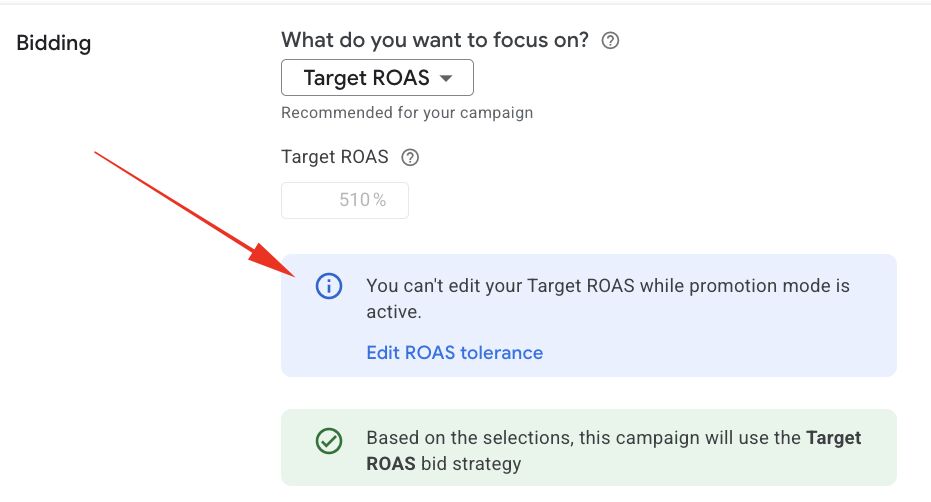
Google has revised its Promotion Mode workflow. When the feature is switched on, the platform shows a clear notice: "You can't edit your Target ROAS while promotion mode is active". Rather than letting you change the Target ROAS directly, the system now permits edits only to the ROAS tolerance setting. Search Engine Roundtable reported the update first, and the news quickly circulated on industry forums.
Key Details
- Target ROAS lock: With Promotion Mode enabled, the Target Return on Ad Spend (ROAS) field becomes read‑only.
- Tolerance adjustment: You can still modify the ROAS tolerance range (for example, ±10 %).
- Notification wording: The UI displays the exact message, "You can't edit your Target ROAS while promotion mode is active".
- Impact scope: The restriction applies to every campaign that uses Promotion Mode, no matter the budget size or industry.
What It Means For Your Business
1. Less Granular Control Over Bidding Goals
Target ROAS is the primary metric for many e‑commerce and lead‑generation advertisers. By locking that figure, Google pushes you to rely on a broader tolerance band, which can produce wider fluctuations in actual ROAS. Small businesses with razor‑thin margins may see spend creep higher before the algorithm settles.
2. AI‑Driven Optimization May Need Re‑training
Google’s Smart Bidding engines treat Target ROAS as a core signal. When the signal is frozen, the AI leans more heavily on secondary data—historical conversion rates and the adjustable tolerance. Expect a brief learning period during which performance could dip as the system adapts.
3. VisibilityAI’s Role Becomes Even More Critical
VisibilityAI helps local firms secure citations in AI‑driven search tools such as ChatGPT, Perplexity, Gemini, and Google AI Overviews. When paid campaigns become less predictable, organic AI visibility acts as a safety net. By ensuring your business appears in AI‑generated answers, you lessen dependence on paid traffic that may be throttled by the new ROAS lock.
4. Budget Planning Must Account for the Tolerance Gap
Because some accounts allow a tolerance as wide as ±20 %, you should re‑evaluate daily and monthly spend caps. Building a buffer into your forecasts helps absorb any overspend that occurs while the algorithm adjusts.
Action Steps for Marketers
1. Pause Promotion Mode if you need an immediate ROAS tweak. Turning the feature off restores full editability.
2. Set a tighter tolerance (e.g., ±5 %) when you can tolerate a slower learning curve.
3. Monitor key metrics daily for the first two weeks after any change. Watch for spikes in CPA, CPC, and overall spend.
4. Boost AI‑driven organic presence with VisibilityAI’s citation services. More AI citations reduce pressure on paid channels.
5. Reach out to your Google Ads account manager to learn about upcoming beta features that might restore ROAS editability.
Bottom Line
The new restriction underscores how platform tweaks can ripple across both paid and organic strategies. By staying agile—adjusting tolerance settings, tracking performance closely, and strengthening AI‑powered organic visibility—you can keep ROI on track and continue attracting customers through search ads and AI‑generated answers.
VisibilityAI helps local businesses stay discoverable in the age of AI search. When paid channels wobble, a strong AI citation strategy ensures your brand remains top‑of‑mind.
Why It Matters:
For businesses that rely on Google Ads to drive foot traffic, online sales, or lead generation, the ability to fine‑tune Target ROAS is essential for protecting profit margins. When Google locks that lever, advertisers must lean on broader tolerance settings, which can let spend drift outside the intended ROI range. This uncertainty is especially risky for small, local businesses that cannot absorb unexpected cost spikes.
At the same time, AI‑driven search experiences are turning organic citations into a primary discovery channel. VisibilityAI specializes in placing your business in the knowledge graphs that power ChatGPT, Perplexity, Gemini, and Google AI Overviews. By fortifying that foothold, you create a safety net: even if paid performance wavers, potential customers will still find you through AI‑generated answers, reviews, and local listings. In a landscape where platform rules can change overnight, a dual strategy of paid ads and AI‑optimized organic presence ensures resilience and sustained growth.
Why This Matters For Your Business
For businesses that depend on Google Ads to generate foot traffic, online sales, or leads, the ability to fine‑tune Target ROAS is a cornerstone of margin protection. When Google locks that lever, advertisers must rely on a broader tolerance band, which can cause spend to drift beyond the intended ROI range—a particular danger for small, local firms with limited financial cushions. Meanwhile, AI‑driven search tools are making organic citations a dominant discovery channel. VisibilityAI focuses on securing citations in the knowledge graphs that power ChatGPT, Perplexity, Gemini, and Google AI Overviews. Strengthening this organic foothold provides a safety net: even if paid campaigns become less predictable, customers can still locate your business through AI‑generated answers, reviews, and local listings. Balancing paid and AI‑optimized organic strategies therefore becomes essential for long‑term resilience.
Frequently Asked Questions
Can I turn off Promotion Mode to edit Target ROAS?
Yes. Disabling Promotion Mode restores full editability of the Target ROAS field. Keep in mind that any benefits from Promotion Mode—such as accelerated learning—will pause while it’s off.
What is the difference between Target ROAS and ROAS tolerance?
Target ROAS is the specific return‑on‑ad‑spend goal you set for the campaign. ROAS tolerance defines the acceptable deviation range (for example, ±10 %). The algorithm can bid higher or lower within that band to meet the overall target.
How can VisibilityAI help if my paid performance dips?
VisibilityAI creates and manages AI‑friendly citations, ensuring your business appears in knowledge panels and answer snippets that power AI chat and search tools. This boosts organic discoverability, reducing reliance on paid ads for traffic.
Is your business showing up in AI search?
Get your free AI visibility audit - see if ChatGPT, Perplexity, and Google AI actually recommend you.