
Home / News / Google Moves AI Source Icons to Bottom—What Small Businesses Must Know
Google Moves AI Source Icons to Bottom—What Small Businesses Must Know
Google is testing a new placement for source icons in AI Overviews, moving them from the top to the bottom of the answer. This subtle shift could reduce visibility of citations and lower click‑through rates for businesses. Small‑business owners should monitor the experiment and adjust their AI‑visibility strategies accordingly.
Key Highlights
- ✓Google tests moving AI source icons to bottom of Overviews
- ✓Icons now hidden until hover, reducing immediate source visibility
- ✓Potential decline in click‑through rates to cited sites
- ✓Small businesses must adapt by boosting citation quality and AI optimization
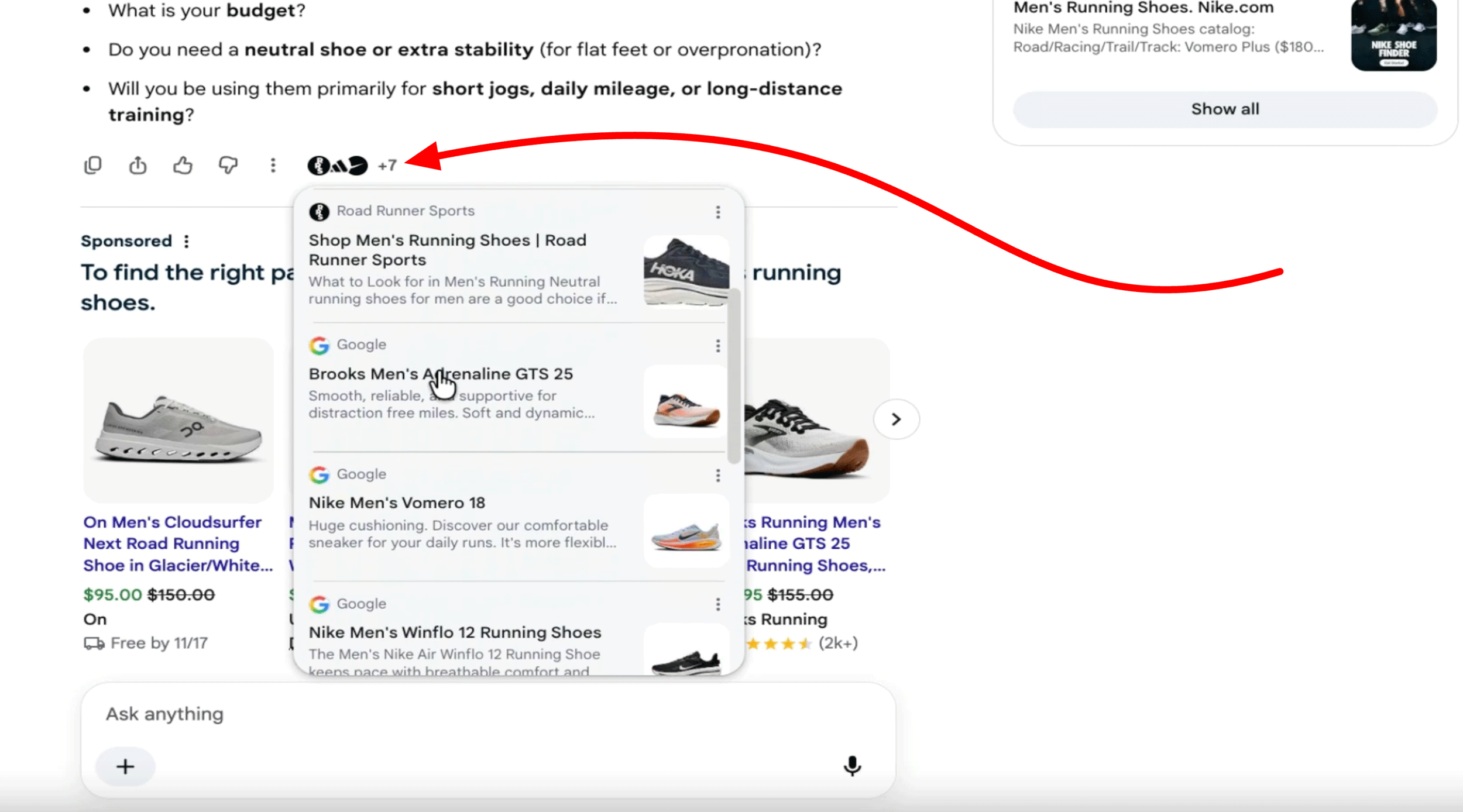
What Happened\n\nGoogle announced that it is testing a new placement for the source icons that appear in AI Overviews. In the current layout, the icons—indicating the number of sites cited by Google’s AI—appear just above the answer text. The experiment now moves those icons to the very bottom of the overview, below the answer itself. The change is subtle but could influence how users perceive and interact with AI responses.\n\n## Key Details\n\n- **Previous placement** – Source icons were displayed at the top of the AI Overview, directly above the citations list.\n- **New placement** – Icons now sit at the bottom of the answer, with the full list of citations revealed only when a user hovers over the icon.\n- **Visibility impact** – The icons are no longer immediately visible, making it less obvious that the answer is sourced from external sites.\n- **Potential click‑through effect** – If users cannot quickly see where the information comes from, they may be less inclined to click through to the original source.\n- **Testing phase** – Google has not yet rolled this out universally; the change is still in the experimental stage.\n\n## What It Means For Your Business\n\n### 1. Reduced Click‑Through Rates (CTR)\n\nWhen the source icons are at the top, they serve as a cue that the AI has pulled data from reputable sites—often the very sites that drive traffic. Moving them to the bottom can diminish that cue, potentially lowering CTR from AI Overviews to your pages. For businesses that rely on AI‑generated content to funnel visitors, this is a direct hit.\n\n### 2. More Competition for Citations\n\nBecause users are less likely to notice the citation list, the “source” signal becomes weaker. This means that even if your content is cited, it may not translate into traffic the way it once did. Competitors who rank higher in traditional SERPs may still benefit, while others could see a decline.\n\n### 3. Opportunity to Optimize AI Visibility\n\nThe shift is a reminder that AI visibility is still in flux. Businesses that proactively optimize for AI search—by ensuring their content is cited and by using structured data—will be better positioned to capture any residual traffic. It’s also an incentive to create high‑quality, authoritative content that Google’s AI will want to reference.\n\n### 4. Need for Proactive Monitoring\n\nBecause the change is experimental, the exact impact may evolve. Small‑business owners should monitor their AI Overview performance (CTR, impressions, citations) and adjust their strategies accordingly. Tools that track AI search visibility will be crucial.\n\n## Actionable Tips\n\n- **Build Authority Through Citations** \n Publish well‑researched articles, case studies, and whitepapers. When other sites reference your work, Google’s AI is more likely to cite it.\n\n- **Use Structured Data** \n Implement Schema.org markup (Article, FAQ, How‑to) to help Google understand and surface your content in AI Overviews.\n\n- **Keep an Eye on SERPs** \n Use SERP monitoring tools to track how your pages appear in AI Overviews and whether the source icons are visible.\n\n- **Engage Users With Clear CTAs** \n Even if the icon is at the bottom, place compelling calls‑to‑action near the answer to encourage clicks.\n\n- **Stay Updated on AI Experiments** \n Follow industry blogs (Search Engine Roundtable, Search Engine Land) to catch changes before they fully roll out.\n\n---\n\nBy staying ahead of these AI search updates, local and small businesses can maintain visibility, preserve traffic, and continue to benefit from AI‑driven discovery.\n\nWhy It Matters: AI search is rapidly becoming a primary way users discover local and small‑business information. The placement of source icons signals to users that the answer is backed by reputable references. When that cue disappears, users may trust the answer less and be less likely to visit the original site. For businesses, this means a potential drop in traffic from AI Overviews.\n\nThe change also underscores that AI visibility is still evolving. Businesses that invest in high‑quality, citable content and structured data are more likely to be referenced by Google’s AI. Those who ignore the shift risk losing the small but valuable traffic that AI Overviews can provide.\n\nFAQs: [{"question":"What are AI Overviews?","answer":"AI Overviews are brief answer boxes that Google’s AI engine generates based on user queries, often pulling data from multiple sources."},{"question":"Will the icon change affect all users?","answer":"The change is in an experimental phase, so it may not appear for everyone yet. It could roll out gradually as Google tests the impact."},{"question":"How can I prepare my site for AI visibility?","answer":"Publish authoritative content, use Schema.org markup, and ensure your pages are easily crawlable so Google’s AI can reference them."}]
Why This Matters For Your Business
AI search has become a primary discovery channel for local and small‑business information, and the source icons act as a quick signal that an answer is backed by reputable references. When that signal is moved to the bottom of the answer, users may not notice the citations at all, which can erode trust and reduce the likelihood that they click through to the original site. For businesses, this means a tangible risk of losing the modest but valuable traffic that AI Overviews currently provide.\n\nThe experiment also illustrates how fluid AI visibility remains. Companies that invest in high‑quality, citable content and structured data are still the ones most likely to be referenced by Google’s AI. Ignoring the shift could leave a business at a competitive disadvantage as the algorithm adapts.
Frequently Asked Questions
What are AI Overviews?
AI Overviews are brief answer boxes that Google’s AI engine generates based on user queries, often pulling data from multiple sources.
Will the icon change affect all users?
The change is in an experimental phase, so it may not appear for everyone yet. It could roll out gradually as Google tests the impact.
How can I prepare my site for AI visibility?
Publish authoritative content, use Schema.org markup, and ensure your pages are easily crawlable so Google’s AI can reference them.
Is your business showing up in AI search?
Get your free AI visibility audit - see if ChatGPT, Perplexity, and Google AI actually recommend you.