
Home / News / Google Removes 'I'm Feeling Lucky' – SEO Impact
Google Removes 'I'm Feeling Lucky' – SEO Impact
Google is testing the removal of the iconic “I’m Feeling Lucky” button and swapping it for AI‑driven shortcuts. The move signals an AI‑first search experience that could reshape how local businesses are discovered and cited.
Key Highlights
- ✓Google tests dropping the iconic "I'm Feeling Lucky" button
- ✓Shift toward AI‑generated search results and new AI buttons
- ✓Impacts local SEO, citations, and AI visibility
- ✓Businesses must adapt content and structured data to stay discoverable
What Happened
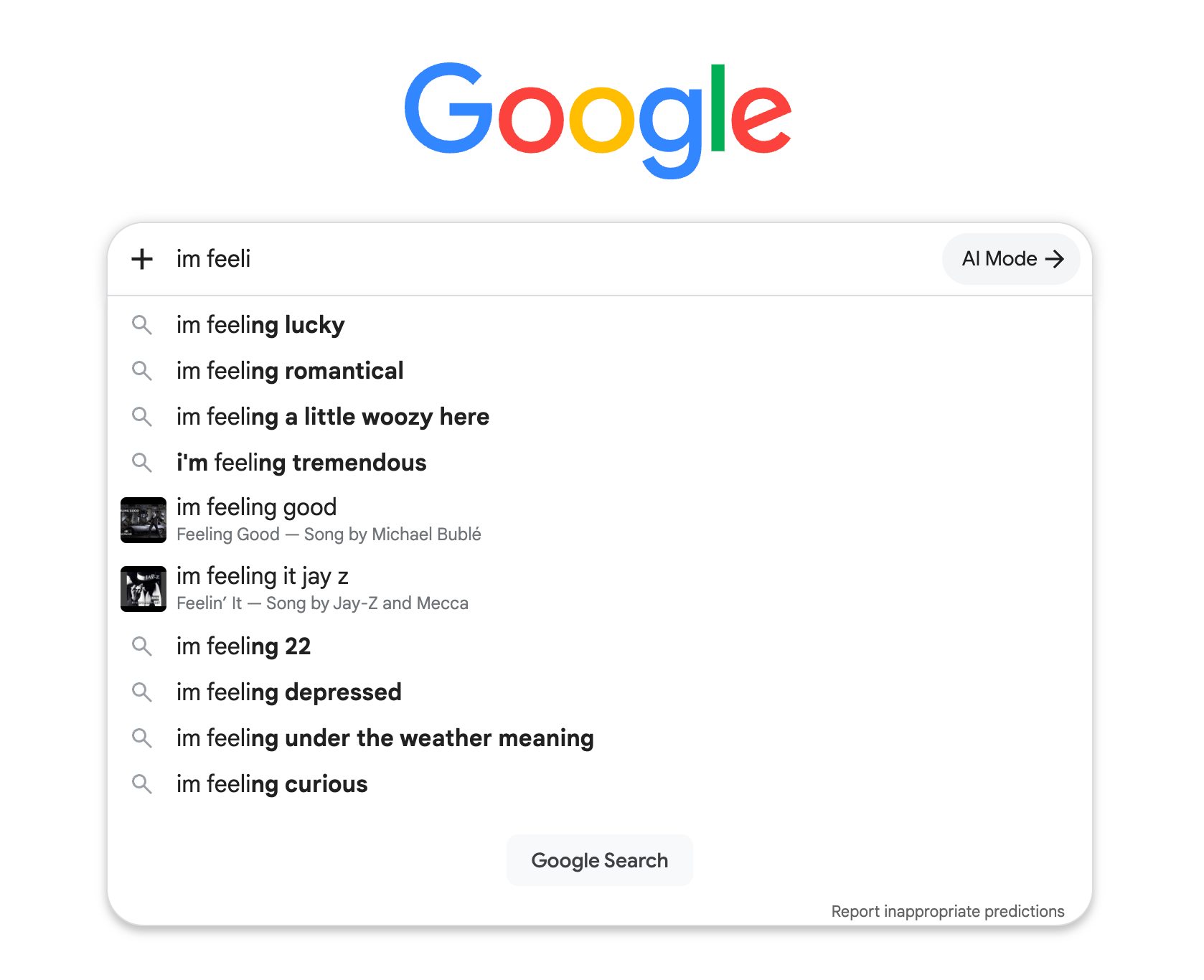
Google is currently testing a change to its search interface that removes the classic I’m Feeling Lucky button from the main search bar. For some users the button disappears entirely, while for others it is replaced with new AI‑powered options.
Key Details
- The change was first spotted by user Khushal Bherwani on X and has been reported by Search Engine Roundtable.
- The removal is part of a broader move to streamline the search experience and shift focus toward AI‑generated responses.
- In May 2025, Google had already experimented with replacing the button with an AI Mode toggle.
- The new layout shows AI buttons next to the search bar, such as Chat, Image, and Code.
- The experiment is currently limited to a subset of users and may roll out globally in the coming weeks.
What It Means For Your Business
1. AI‑First Search Results
Google’s emphasis on AI tools means that the first page of results will increasingly feature AI‑generated snippets, summaries, and direct answers. If your business relies on traditional organic rankings, you’ll need to ensure that your content is structured to be AI‑friendly.
2. Citation and Visibility
When AI assistants pull information from the web, they often reference the most authoritative, up‑to‑date sources. Keeping your business profile, citations, and local listings accurate becomes even more critical because AI models will use that data to answer user queries.
3. Adapting Your Content Strategy
- Schema Markup: Implement rich‑snippet markup (FAQ, How‑to, Product) so AI can surface your content directly.
- Answer‑Ready Content: Create concise, fact‑based answers that match common search intents.
- Local SEO: Maintain consistent NAP (Name, Address, Phone) across all platforms.
4. Monitoring AI Responses
Use tools like VisibilityAI to track how often your business is cited in AI‑generated answers. If you’re not appearing, it may be time to update your citations or add structured data.
Bottom Line
Google’s removal of the I’m Feeling Lucky button signals a shift toward an AI‑centric search experience. For local and small businesses, the key takeaway is to optimize for AI visibility: clean up your citations, enrich your content with structured data, and monitor how AI assistants reference your brand. By staying ahead of these changes, you can ensure your business remains discoverable, even as the search landscape evolves.
Why It Matters: Google’s decision to phase out the "I’m Feeling Lucky" button is more than a cosmetic tweak; it reflects a broader pivot to AI‑centric search. For small and local businesses, this means the way users find you will increasingly depend on how well your data feeds into AI assistants like ChatGPT, Perplexity, Gemini, and Google AI. If your citations, NAP details, and structured data are out of date or inconsistent, AI models may skip your business entirely, reducing your visibility in the new default answer boxes.
The shift also opens the door for businesses that can present concise, answer‑ready content. AI assistants are trained to pull short, factual snippets, so optimizing for these formats—using FAQ schema, how‑to guides, and product markup—can boost the chances that your business appears directly in the AI response. This is a new frontier of local SEO: it’s no longer just about ranking for a keyword, but about being the authoritative source that AI picks to answer a user’s question.
Ultimately, the removal of the button is a sign that Google is prioritizing relevance and speed over traditional organic listings. Businesses that invest in clean, structured data and AI‑friendly content will be positioned to thrive as the search ecosystem evolves.
Why This Matters For Your Business
The phase‑out of the **I’m Feeling Lucky** button marks a strategic shift toward AI‑driven answers rather than classic organic listings. As AI models become the default way Google satisfies queries, the data they draw from must be accurate, current, and easily parsed. For local and small businesses, the practical impact is clear: citations, NAP consistency, and structured markup are no longer optional SEO niceties—they are the primary signals that AI assistants use to decide which business to surface. Companies that fail to keep this information up to date risk disappearing from the very answer boxes that now dominate the SERP. Conversely, businesses that proactively publish concise, answer‑ready content and implement rich‑snippet schema stand to gain prominent placement in AI responses. This new visibility channel can drive traffic and leads even without a traditional top‑ranking position, making AI‑centric optimization a critical component of any modern local‑SEO strategy.
Frequently Asked Questions
Will the 'I'm Feeling Lucky' button be permanently removed?
Google is only testing the change with a limited user base; the button could be rolled out worldwide or restored based on feedback.
How does this affect my local SEO rankings?
AI models will favor concise, structured answers, so keep your citations and schema markup up to date to maintain visibility.
What can I do to keep my business visible to AI assistants?
Refresh your citations, add rich‑snippet schema, and create answer‑ready content that directly addresses common search intents.
Is your business showing up in AI search?
Get your free AI visibility audit - see if ChatGPT, Perplexity, and Google AI actually recommend you.