
Home / News / Google Updates Helpful Content Guidelines: Main Content Focus
Google Updates Helpful Content Guidelines: Main Content Focus
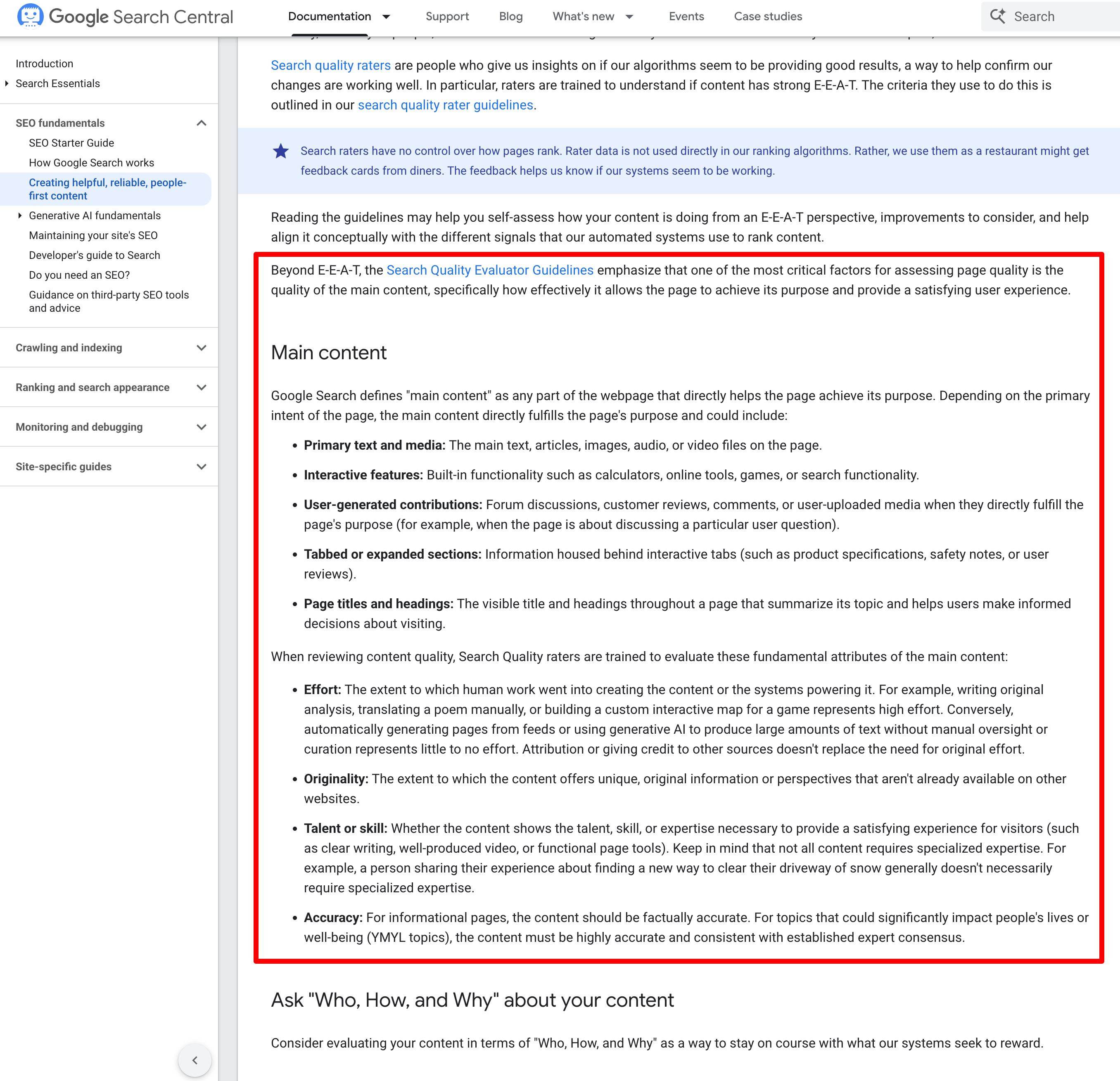
Google refreshed its helpful‑content guidelines, adding two sections that spotlight the main content users read and explain how Search Quality raters evaluate it. The change urges businesses to prioritize depth, originality, and intent alignment in their core copy to stay visible in AI‑driven search results.
Key Highlights
- ✓Main content now defines success for AI search
- ✓Search raters evaluate depth, originality, and intent
- ✓Local pages must feature robust, user‑centric content
- ✓EOT/SA sections clarify source documentation
What Happened
Google refreshed its official “helpful, reliable, people‑first content” guide, adding two new sections that put the spotlight on a page’s main content and detail how Search Quality raters evaluate it. The revision aligns with Google’s ongoing push to reward pages that genuinely serve users rather than relying on keyword‑heavy filler.
Key Details
- Main Content Focus: Google defines main content as the core material that directly answers the user’s question or fulfills the page’s primary purpose. It excludes navigation menus, headers, footers, and ads. For example, a local bakery’s main content would be a detailed description of its signature pastries, not the site’s header links.
- Rater Guidelines: Search Quality raters now assess main content on three fronts:
- Depth and accuracy: Is the information thorough and fact‑checked?
- Originality: Does the page offer unique insights or data?
- User‑intent alignment: Does it directly satisfy the search query?
- EOT/SA Sections: The guide expands the “Evidence of Trust” (EOT) and “Supplementary Analysis” (SA) sections, clarifying how to document sources and support claims.
- No Penalty for Thin Content: Pages lacking substantial main content may see lower rankings, especially as AI tools like ChatGPT pull results from sites with richer core material.
- Impact on Local Business Pages: Google emphasizes that local landing pages, service descriptions, and product pages must contain robust, user‑centric main content.
What It Means For Your Business
1. Audit Existing Pages – Identify pages where the main content is weak or missing. Add authoritative sections that answer the most common customer questions.
2. Leverage Structured Data – Implement schema markup for reviews, FAQs, and local business details. This helps AI systems surface your information more accurately.
3. Create Long‑Form Guides – Replace brief blurbs with comprehensive how‑to articles or guides that cover a topic from multiple angles.
4. Cite Sources – Back every claim with links to reputable studies, industry reports, or official local‑government data to satisfy EOT requirements.
5. Monitor AI Search – Test how your pages appear in ChatGPT, Gemini, or other AI assistants. If the content surfaces, you’re meeting the new main‑content standards.
By aligning with Google’s refreshed guidelines, you increase the likelihood that AI assistants cite your pages, driving more foot traffic and online conversions.
Why It Matters
Google’s focus on main content reshapes how AI models retrieve and present information. When a user asks a question to ChatGPT or Google’s AI, the assistant pulls from sources that demonstrate depth, originality, and trust. If your site’s core copy is shallow, the AI will skip it, even if you rank well for traditional keywords.
For small and local businesses, this shift translates into missed opportunities in the fastest‑growing discovery channel. Robust main content not only improves rankings but also builds confidence with customers, leading to higher conversion rates.
In an era dominated by voice search and AI assistants, ensuring that your main content meets these standards is no longer optional—it’s essential for staying visible and credible.
FAQs
- Q1: Does this update affect all types of content, or just local pages?
- A1: The guidelines apply to all content, but local landing pages and service descriptions feel the impact most because they answer location‑specific queries.
- Q2: Will my existing content be penalized if it doesn’t meet the new guidelines?
- A2: There’s no immediate penalty, but pages that don’t improve their main content may gradually slip in rankings. Updating the core copy can prevent future drops.
- Q3: How can I measure if my main content is meeting the new standards?
- A3: Use Google Search Console to track impressions from featured snippets and AI‑driven results, watch traffic from voice assistants, and run manual tests in AI chatbots to see if your pages are being referenced.
Why This Matters For Your Business
Google’s emphasis on main content changes the way AI assistants retrieve answers. When a user asks a question, the model prefers sources that demonstrate depth, originality, and verifiable trust. Shallow pages are bypassed, regardless of traditional keyword rankings. For local businesses, the practical impact is clear: fewer AI‑driven referrals if the core copy doesn’t meet the new bar. Investing in comprehensive, well‑cited content not only safeguards SERP positions but also boosts credibility, turning AI impressions into foot‑traffic and sales.
Frequently Asked Questions
Does this update affect all types of content, or just local pages?
The guidelines apply to all content, but local landing pages and service descriptions feel the impact most because they answer location‑specific queries.
Will my existing content be penalized if it doesn’t meet the new guidelines?
There’s no immediate penalty, but pages that don’t improve their main content may gradually slip in rankings. Updating the core copy can prevent future drops.
How can I measure if my main content is meeting the new standards?
Use Google Search Console to track impressions from featured snippets and AI‑driven results, watch traffic from voice assistants, and run manual tests in AI chatbots to see if your pages are being referenced.
Is your business showing up in AI search?
Get your free AI visibility audit - see if ChatGPT, Perplexity, and Google AI actually recommend you.