
Home / News / Google Updates URL Rules: Hyphens, Emojis & Ranking Signals
Google Updates URL Rules: Hyphens, Emojis & Ranking Signals
Google has released new guidelines clarifying how it handles URL structures, emphasizing that keywords are a minor ranking factor. The search giant advises using hyphens over underscores and warns against using emojis in domain names. Here is what local business owners need to know to optimize for AI search.
Key Highlights
- ✓Keywords in URLs are a minor ranking factor, not a dominant one.
- ✓Always use hyphens to separate words in your URLs, not underscores.
- ✓Google detects spam in URLs and warns against using emojis.
- ✓Clean, readable URLs help AI crawlers cite your business accurately.
What Happened
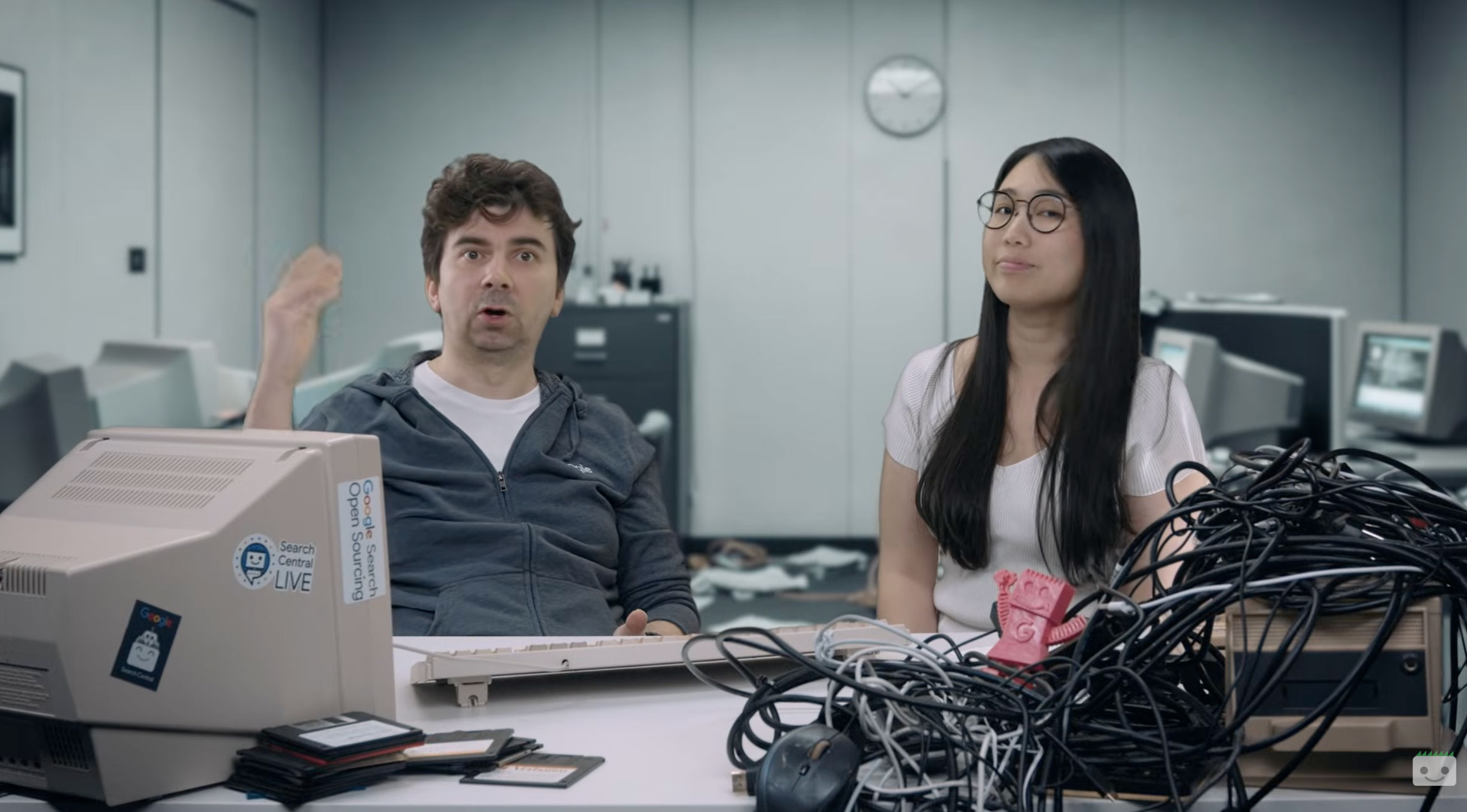
Google recently launched a new video series called "The Non-Canonical Cabinet" to clarify technical aspects of search. The first installment, featuring Gary Illyes and Cherry Prommawin, dove deep into how Google Search processes URLs. This isn't just a technical deep dive for engineers; it has direct implications for how businesses structure their websites to be discovered by both human searchers and AI tools.
The video addresses long-standing questions about URL structure, specifically focusing on the role of keywords in rankings, the correct use of separators, and the presence of non-standard characters like emojis. Google aims to demystify how these elements influence the crawling and indexing processes that ultimately lead to discovery.
Key Details
- Keywords in URLs are a minor signal: Gary Illyes clarified that while having keywords in your URL or domain name is beneficial, it is an "incredibly small signal" for rankings. It is not a magic bullet that will guarantee the top spot.
- Hyphens vs. Underscores: The video reiterates the importance of using hyphens (
-) to separate words in a URL path rather than underscores (_). This improves readability for users and helps search engines parse the keywords within the URL structure. - Emojis and Spam Detection: Google explicitly addressed the use of emojis in domain names. Illyes humorously pointed out that a domain like
chicken-fire.com(using emojis) is technically possible but not recommended. Google is actively equipped to detect spam and non-standard practices in URL structures. - Internationalized Domains: The discussion touched on Punycode and internationalized domain names (IDNs), explaining why strings starting with
xn--are not typos but legitimate encoded characters for non-Latin scripts. - Keyword Stuffing: The search giant emphasized that creating long, keyword-stuffed URLs (e.g.,
best-grilled-chicken-cheap-delicious-amaze-amaze-amaze) will not result in a permanent #1 ranking and can be viewed as spammy behavior.
What It Means For Your Business
For local and small business owners, this news serves as a reminder that technical SEO is still relevant, even in an AI-driven landscape. While AI tools like ChatGPT and Perplexity prioritize content quality, they rely on clean, crawlable data.
When AI crawlers visit your site to generate answers for users, they look for structure and clarity. A messy URL structure with underscores, excessive keywords, or emojis can confuse these bots, potentially leading to your site being cited less frequently or inaccurately.
Here is how to apply these findings immediately:
1. Audit Your URLs: Check your existing site structure. Ensure you are using hyphens to separate keywords in your page paths. For example, change /best_chicken_recipe to /best-chicken-recipe.
2. Avoid the Emoji Trap: Do not attempt to use emojis in your main domain name to stand out. It will likely be flagged as spam, and it harms user experience for visitors.
3. Focus on User Experience: Google’s advice on hyphens is largely about readability. A clean URL helps users understand where they are on your site before they even click, improving click-through rates and user engagement. Better user engagement signals to both Google and AI algorithms that your content is valuable.
By adhering to these standard practices, you ensure your business is easily discoverable and cited by AI tools, maximizing your visibility in the evolving search ecosystem.
Why This Matters For Your Business
As AI search becomes the primary way users find local businesses, the integrity of your website's data structure is paramount. AI tools scrape and cite information from the web to answer user queries. If your URL structure is cluttered with underscores or non-standard characters, AI crawlers may struggle to parse your site correctly, resulting in missed opportunities for your business to appear in AI Overviews or conversational search results. Understanding Google's stance on URLs helps you build a 'citable' entity that AI models trust and can easily reference.
Frequently Asked Questions
Are keywords in my URL important for SEO?
Yes, but they are an incredibly small signal. While helpful, stuffing them into long strings won't guarantee a top ranking and can actually look spammy.
Should I use hyphens or underscores in my URLs?
You should use hyphens. They separate words clearly for both users and search engines, making the URL easier to read and parse.
Can I use emojis in my domain name?
Technically, yes, but you shouldn't. Google detects spam and encourages clean URLs. Using emojis can hurt your credibility and user experience.
Is your business showing up in AI search?
Get your free AI visibility audit - see if ChatGPT, Perplexity, and Google AI actually recommend you.