
Home / News / Google's 3-Item Product Grid Test & Local SEO Impact
Google's 3-Item Product Grid Test & Local SEO Impact
Google is testing a new product grid that initially shows only three items, with the ability to expand to four or five. The shift could affect how local businesses appear in organic results and how AI assistants extract product data, making it crucial for small firms to optimize their listings.
Key Highlights
- ✓Google tests a three‑item product grid that expands to five or more
- ✓The layout change could alter click‑through rates and AI assistant citations
- ✓Local businesses should optimize structured data and inventory visibility
- ✓VisibilityAI can help track SERP performance during this beta phase
What Happened
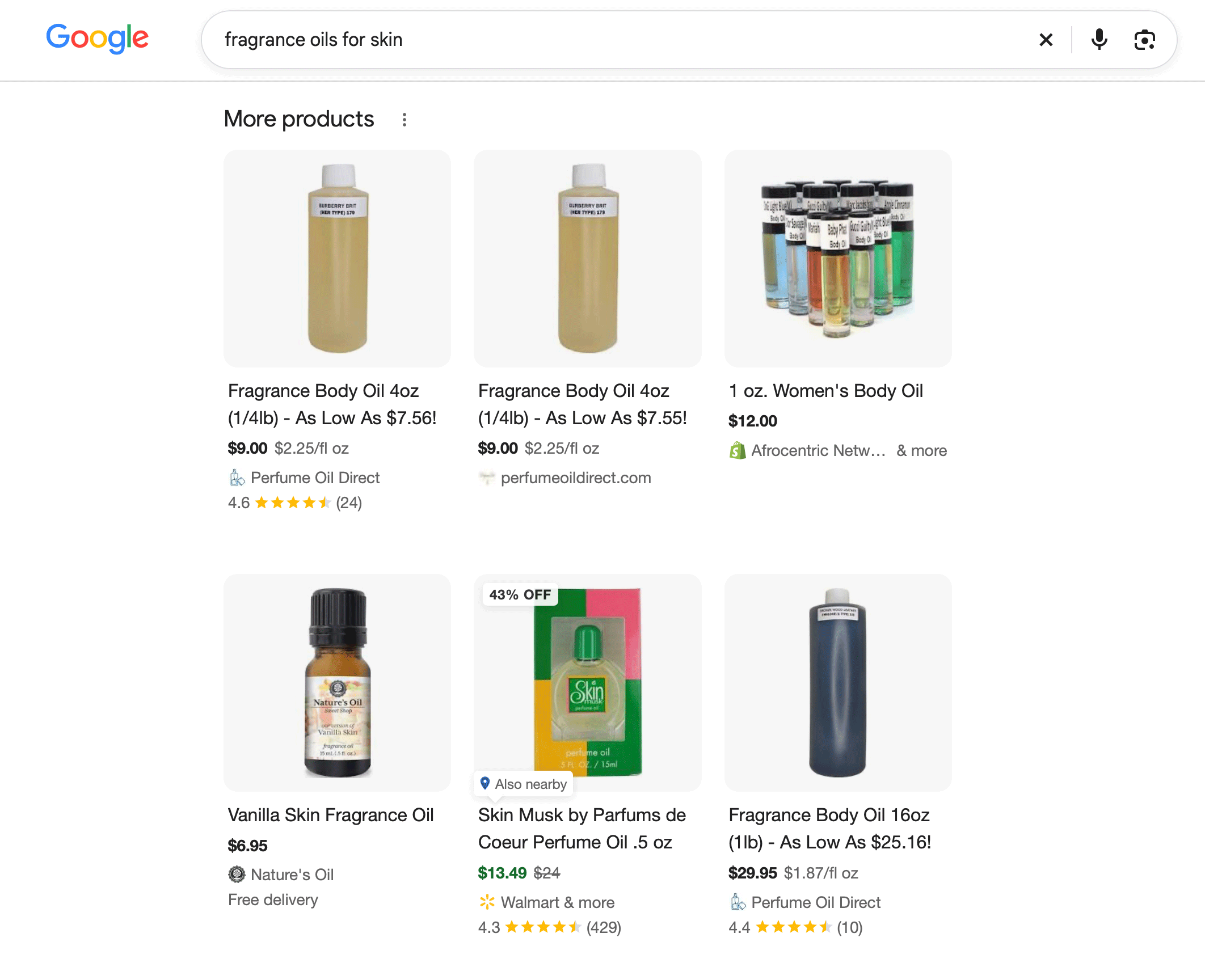
Google Search has rolled out a beta test featuring a three‑item product grid in its “More Products” section. Historically, users saw a five‑item row that grew vertically as they scrolled. In the new test, the grid sometimes displays just three items across and can dynamically expand or contract between three, four, and five items. Khushal Bherwani first reported the change on X, sharing screenshots and a brief video that demonstrate the toggle.
The experiment appears in a limited set of queries across the United States, mainly for products with local relevance—think coffee makers, lawn mowers, or craft supplies. While it’s unclear whether the layout will become permanent, the test hints at a possible re‑prioritization of product information on the SERP.
Key Details
- Grid Size Variations – Depending on the test group, the grid may show 3, 4, or 5 items side‑by‑side.
- Dynamic Expansion – As users scroll or click “See more,” the layout can grow or shrink.
- Visual Consistency – Card design, price, rating, and thumbnail remain the same, though a narrower width could influence click‑through rates.
- A/B Testing Scope – Google is experimenting across numerous product categories, with a particular focus on local inventory.
- Impact on Rich Results – The grid stays a rich result type, but the new format may affect how often it appears for a given query.
Why the Grid Size Matters
Searchers increasingly rely on AI assistants (ChatGPT, Gemini, Perplexity) that scrape SERP data to answer questions. Those assistants often pull information directly from the product grid. A narrower grid reduces the number of products visible at a glance, which can shape the assistant’s response and the likelihood that a business is cited.
How Google’s Test Affects Local SEO
1. Visibility – Local businesses with a product listing in the grid may lose prominence when only three cards are shown.
2. Click‑Through Rates – Fewer cards can make each one larger and more eye‑catching, potentially boosting CTR.
3. AI Citation – AI tools tend to prioritize the first few cards; a tighter grid concentrates attention on those top products.
4. Competitive Advantage – Companies that fine‑tune their product data (structured data, high‑quality images, accurate pricing) are more likely to appear in the grid and be favored by AI assistants.
What It Means for Your Business
- Optimize Structured Data – Keep your products updated with the latest Schema.org markup. Google’s grid relies on rich snippets to populate the cards.
- Focus on Local Inventory – If you sell locally, clearly display stock availability and store hours on product pages.
- Monitor SERP Performance – Tools like VisibilityAI can help you track whether your products appear in the new grid and how many clicks they generate.
- Prepare for AI Discovery – AI assistants will continue to reference the grid, but they may weight the first two or three cards more heavily. Ensure those cards showcase your best offers.
- Adjust Paid Strategies – If you run Shopping or local product ads, consider testing ad formats that mimic the grid’s look to stay competitive.
By staying ahead of Google’s UI experiments, you can keep your products discoverable—both to human shoppers and to the AI assistants that are reshaping online buying habits.
Takeaway
Google’s three‑item product grid test is more than a cosmetic tweak. It signals a shift in how product visibility is structured, with direct implications for local businesses that depend on organic discovery and AI‑driven citations. Keep your product data clean, watch SERP changes, and adapt your strategy to maintain top placement in the evolving search landscape.
Why It Matters
Google’s new grid layout directly influences how search results are parsed by AI assistants like ChatGPT and Gemini. Those assistants often scrape the first few product cards to generate answers. If a local business’s products are pushed down or omitted from the initial three cards, the assistant may not cite the business, reducing its AI discovery potential.
For small businesses, AI‑driven discovery is becoming a critical traffic source. A higher citation rate by AI tools can translate into more site visits, better conversion rates, and stronger brand credibility. Understanding and adapting to the grid changes helps owners keep their products front‑and‑center in both traditional search results and AI‑generated responses.
FAQs
[{
"question": "Will the three‑item grid replace the five‑item layout permanently?",
"answer": "No. Google is still testing the format, and the layout may revert to five items or evolve further based on user engagement data."
},
{
"question": "How can I make sure my products appear in the grid?",
"answer": "Use up‑to‑date Schema.org product markup, provide clear titles, prices, ratings, and high‑quality images, and keep inventory and local availability information accurate."
},
{
"question": "Will this affect paid Shopping ads?",
"answer": "Paid Shopping ads follow separate placement rules, but the visual style of the grid could influence how users perceive paid versus organic listings. Align your ad creative with the look of your product pages for consistency."
}]
Why This Matters For Your Business
AI assistants such as ChatGPT, Gemini, and Perplexity increasingly rely on the top results displayed in Google’s SERP to generate answers. When the product grid shows only three items, those cards receive disproportionate attention, meaning businesses that appear lower in the grid may be overlooked by the assistant’s algorithms. Consequently, a narrower grid can directly affect a company’s visibility in AI‑driven responses, which are becoming a major discovery channel for shoppers. For local businesses, this shift matters because AI citations often translate into additional traffic and credibility. A higher placement in the limited‑size grid improves the odds of being referenced, which can boost click‑through rates, conversions, and overall brand trust. Staying proactive—by optimizing structured data and highlighting local inventory—helps ensure a business remains among the first cards that both users and AI assistants see.
Frequently Asked Questions
Will the three‑item grid replace the five‑item layout permanently?
No. Google is still testing the format, and the layout may revert to five items or evolve further based on user engagement data.
How can I make sure my products appear in the grid?
Use up‑to‑date Schema.org product markup, provide clear titles, prices, ratings, and high‑quality images, and keep inventory and local availability information accurate.
Will this affect paid Shopping ads?
Paid Shopping ads follow separate placement rules, but the visual style of the grid could influence how users perceive paid versus organic listings. Align your ad creative with the look of your product pages for consistency.
Is your business showing up in AI search?
Get your free AI visibility audit - see if ChatGPT, Perplexity, and Google AI actually recommend you.