
Home / News / Google's October API Changes: Impact on DV360 & YouTube Ads Updates
Google's October API Changes: Impact on DV360 & YouTube Ads Updates
Google is implementing three critical unversioned changes to the Display & Video 360 API this October. These updates will remove significant targeting exclusions and introduce new requirements for YouTube responsive ads, prompting businesses to modify their integrations promptly to prevent disruptions.
Key Highlights
- ✓Content label exclusions removed from DV360 API
- ✓Sensitive category exclusions also eliminated
- ✓YouTube responsive ads now require business name and logo
- ✓Unversioned changes demand immediate integration updates
What Happened
Google has announced three unversioned changes to the Display & Video 360 API set to take effect in October. These updates will eliminate certain targeting exclusions and introduce new requirements for YouTube responsive ads. Since these changes are unversioned, businesses with existing integrations must update them immediately rather than waiting for a new API release.
Key Details
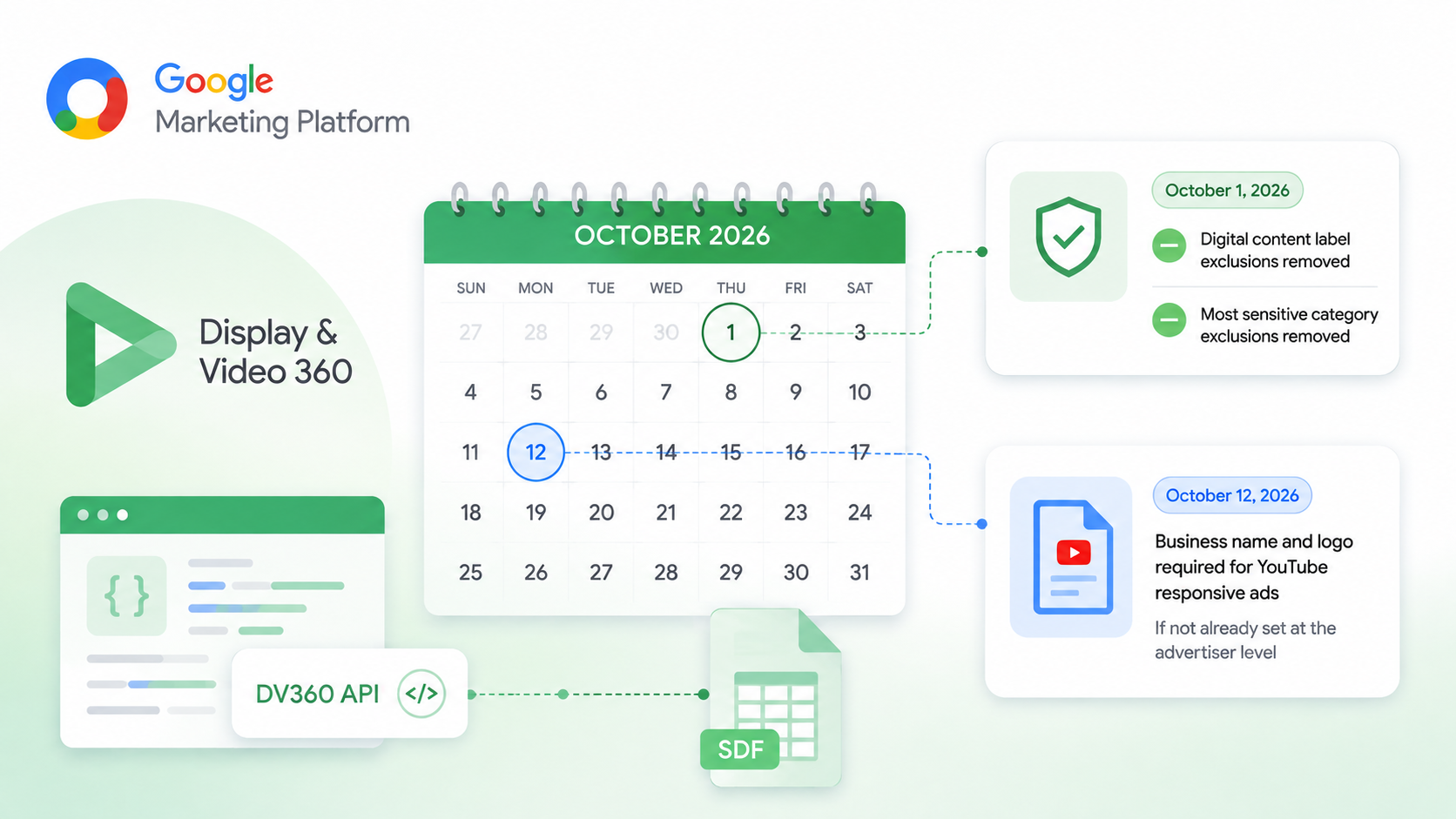
- Content Label Exclusion Removal – Effective Oct. 1, advertisers will lose access to the TARGETING_TYPE_DIGITAL_CONTENT_LABEL_EXCLUSION option. This means they can no longer exclude specific digital content labels via the API.
- Sensitive Category Exclusion Removal – The same date will also see the removal of TARGETING_TYPE_SENSITIVE_CATEGORY_EXCLUSION, alongside associated Brand Safety columns in Structured Data Files.
- YouTube Responsive Ad Requirements – Starting Oct. 12, any new or updated responsive ad must now include a business name and logo. If default values for these fields have not been set at the parent advertiser level, the upload will fail.
- Impact on Structured Data Files – Marketers must clean up Line Item files that reference the removed columns to avoid errors and ensure successful uploads.
What It Means For Your Business
These changes could significantly impact your marketing strategy, especially if you rely on DV360 for brand-safety filtering. The removal of content-label and sensitive-category exclusions necessitates a reevaluation of how you manage where your ads are displayed. Consider the following steps:
1. Audit your current targeting rules – Review your existing lines for any that utilize the removed options.
2. Update your integration scripts – Eliminate references to the discontinued targeting types from your scripts.
3. Leverage alternative brand-safety tools – Explore Google’s newer Brand Safety API or consider third-party solutions to maintain effective filtering.
The new requirement for business names and logos in YouTube responsive ads, while seemingly minor, is essential. If you automate ad uploads using Structured Data Files, ensure that you add the necessary columns before Oct. 12 to avoid campaign failures. This change also reflects Google’s commitment to promoting clearer brand identities across its ad inventory, which can enhance consumer trust.
In summary, the changes coming in October demand prompt action: audit your processes, update your systems, and conduct thorough testing. Small businesses leveraging DV360 or YouTube for local visibility should prepare a migration checklist now to ensure their campaigns run smoothly and their brands remain protected.
Why This Matters For Your Business
For businesses striving to enhance their visibility through AI-driven tools, maintaining brand safety and a consistent identity is more crucial than ever. Google's updated requirements ensure that when your ads appear in AI-generated search results or through voice assistants, they will showcase your verified business name and logo, fostering trust and potentially increasing click-through rates. Furthermore, the elimination of content-label and sensitive-category exclusions pushes you to reassess the contexts in which your ads are displayed. If your content is associated with material that could damage your reputation, AI tools might reduce your visibility. By proactively refining your targeting strategies and ensuring your brand assets are properly implemented, you can safeguard your local presence and uphold the quality signals that AI algorithms consider when recommending your business.
Frequently Asked Questions
When do the changes take effect?
The content label and sensitive category exclusions will take effect on October 1, while the YouTube responsive ad requirements start on October 12.
Do I need to upgrade to a new API version?
No. The changes are unversioned, so you must update your existing integration immediately rather than waiting for a new API release.
What if I already have business name and logo set?
If your parent advertiser already has default values, the new requirement won’t affect you. Just verify that your structured data files reference those defaults.
Is your business showing up in AI search?
Get your free AI visibility audit - see if ChatGPT, Perplexity, and Google AI actually recommend you.