
Home / News / How to Measure & Track Your Brand Visibility in Google Gemini
How to Measure & Track Your Brand Visibility in Google Gemini
Standard analytics tools like Google Search Console fail to capture when Google Gemini recommends your business to prospective buyers. To stay competitive, business owners must learn how to directly track brand mentions, gauge share of voice, and optimize their presence across the emerging AI search landscape.
Key Highlights
- ✓Gemini brand mentions do not appear in Google Search Console or Google Analytics reports.
- ✓AI interaction creates an invisible multi-touch customer journey that traditional analytics miss.
- ✓Gemini outputs fluctuate constantly due to location, user context, and dynamic model updates.
- ✓Businesses must track long-term patterns—such as prompt frequency and share-of-voice—rather than static keyword rankings.
The way consumers find and choose local businesses is undergoing a monumental shift. Millions of prospective buyers now bypass traditional search engine results pages, relying instead on AI tools like Google Gemini, ChatGPT, and Perplexity for direct recommendations. Yet business owners and marketers face a critical blind spot: standard tools like Google Analytics and Google Search Console cannot track when or how a business appears inside an AI-generated answer.
A recent report from Search Engine Land highlights this growing challenge, outlining why modern brands must rethink visibility measurement in the era of Generative Engine Optimization (GEO) and Answer Engine Optimization (AEO).
---
What Happened
Search Engine Land revealed that conversational interactions within Google Gemini create a buyer journey that is virtually untrackable through standard web analytics. Rather than presenting a static list of links, Gemini synthesizes unstructured web data into tailored answers when users request product or service suggestions.
If Gemini recommends your business, the prospective customer might not click through immediately. Instead, they may conduct follow-up research on Google Search, ask additional questions, or visit your site directly days later. By the time a conversion occurs, web tracking attributes the visit to organic search or direct traffic, masking the original AI encounter.
Because Gemini brand mentions do not trigger classic search impressions or clicks, marketers must transition from tracking fixed rank positions to directly measuring AI visibility patterns.
---
Key Details: Why Gemini AI Visibility Is Hard to Measure
Unlike classic SEO, where a keyword query yields relatively consistent search rankings, AI platforms rely on non-deterministic, generative models. Measuring your presence in Gemini presents several distinct challenges:
- Hyper-Personalization and Context: Google incorporates personal account signals into Gemini, drawing from Gmail, Google Photos, Search history, and physical location for opted-in users. Consequently, two people submitting the exact same prompt can receive dramatically different recommendations.
- No Single "Rank Position": AI responses don't follow a neat top-10 layout. Your business might serve as the primary recommendation in one session, share space with three competitors in another, or vanish entirely from a follow-up query.
- The Multi-Touch Attribution Void: Buyers discovering brands via Gemini frequently follow non-linear paths to purchase, creating an attribution blind spot for marketing teams.
The Solution: Tracking AI Patterns Instead of Rankings
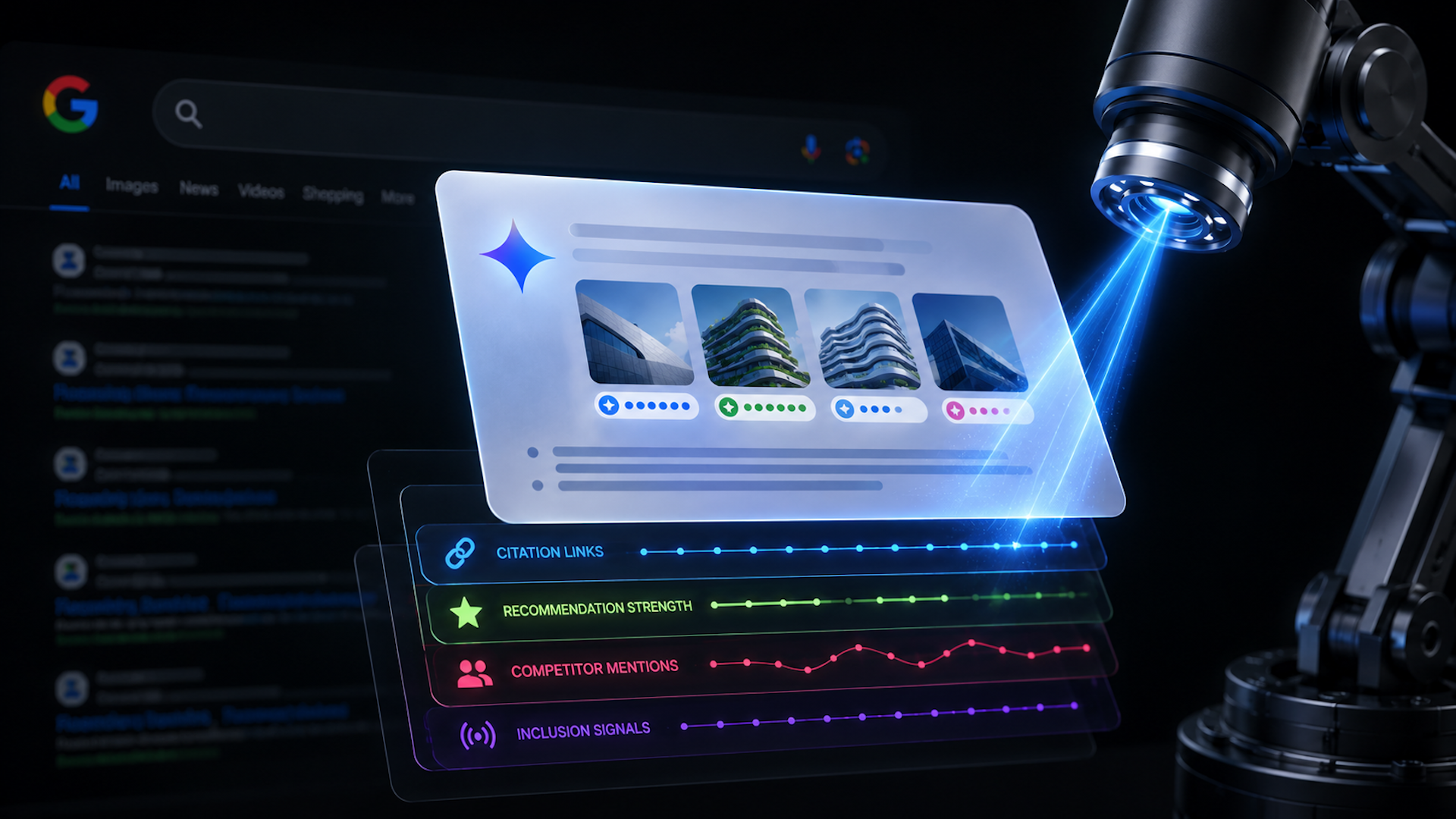
To determine whether your brand is capturing mindshare in Google Gemini, you must evaluate patterns over time across four core metrics:
1. Prompt Frequency: How routinely your brand appears across a defined cluster of high-intent prompts (e.g., "Best commercial plumber near me" or "Top accounting software for small retail stores").
2. Recommendation Consistency: Whether Gemini steadily highlights your business or mentions it only sporadically.
3. Share of Voice & Competitive Positioning: How prominently your business is presented relative to direct regional or industry rivals.
4. Sentiment and Messaging: Whether Gemini accurately reflects your core services, value propositions, and unique selling points.
---
What It Means For Your Business
For small and local business owners, Google Gemini is rapidly evolving from an experimental tool into a primary gateway for answers across Google Search, mobile, and Android devices.
Marketers and business leaders can adapt to these changes through three practical steps:
1. Stop Relying Solely on Google Search Console
While Google Search Console remains vital for monitoring technical site health, it cannot register when AI models reference your brand entity. You need dedicated AI monitoring protocols that systematically evaluate prompts tailored to your ideal customer profile.
2. Build a Three-Tiered Visibility Tracking System
To establish a clear view of your AI footprint, integrate three complementary tracking layers:
- Manual Prompt Spot-Checking: Conduct regular, unauthenticated tests using key buyer queries across Gemini, ChatGPT, and Perplexity.
- Automated AI Visibility Platforms: Leverage specialized GEO tools like VisibilityAI to track prompt performance automatically, evaluate competitive share of voice, and map brand citations across major AI models.
- Correlation Analytics: Monitor macro metrics—such as upticks in direct traffic, branded search volume, or Google Business Profile phone calls—that align with your generative AI optimization initiatives.
3. Focus on AI Citation Sources
Gemini builds recommendations by synthesizing content from authoritative web entities, local directories, customer reviews, press releases, and industry roundups. To improve your odds of being cited by Gemini, optimize your presence across the specific third-party ecosystems AI models rely on for verified factual data.
Why This Matters For Your Business
For small and local businesses, securing a recommendation in Google Gemini is becoming just as crucial as ranking #1 on traditional Google Search. When high-intent consumers ask Gemini for guidance, the AI typically highlights only 2-3 trusted options. Failing to appear on that concise shortlist means losing potential revenue before the customer ever opens a standard search engine. Directly tracking your Gemini visibility helps identify gaps in digital reputation, uncover competitive threats, and refine the exact citation sources that feed AI models. Without active AI monitoring, local service providers and SMBs risk yielding ground to competitors who are proactively optimizing for conversational answers. Establishing a structured measurement process today enables business owners to turn unseen AI recommendations into a dependable, measurable pipeline for brand awareness and customer acquisition.
Frequently Asked Questions
Why don't Google Gemini mentions appear in Google Analytics?
Google Gemini delivers direct conversational responses rather than standard referral links. When users discover your business through Gemini and later visit your site directly or via a search engine, traditional analytics platforms classify the session as direct or organic search, hiding the original AI touchpoint.
How can a local business check if Gemini is recommending them?
You can gauge your visibility by running targeted prompt queries directly in Gemini (such as 'What are the top-rated digital marketing agencies in [City]?') or by using specialized AI monitoring platforms like VisibilityAI to automate prompt sampling and monitor share of voice.
What is Generative Engine Optimization (GEO)?
Generative Engine Optimization (GEO) is the strategic practice of optimizing your online footprint—including brand content, customer reviews, and directory citations—so generative AI platforms like Gemini, ChatGPT, and Perplexity recognize, trust, and recommend your business in direct answers.
Is your business showing up in AI search?
Get your free AI visibility audit - see if ChatGPT, Perplexity, and Google AI actually recommend you.